There is a mental model that holds many Nigerian businesses back from their full digital potential, and it sounds like this: ‘We have a website it tells people who we are and how to reach us.’ That is a brochure. And a brochure is a passive document that sits in a rack and waits. A properly built website is something entirely different. It is an active, always-on business asset that works around the clock to attract prospects, qualify leads, demonstrate credibility, and convert visitors into paying clients all without a salary, a sick day, or a performance review. The question is not whether your business has a website. It is whether your website is actually working.
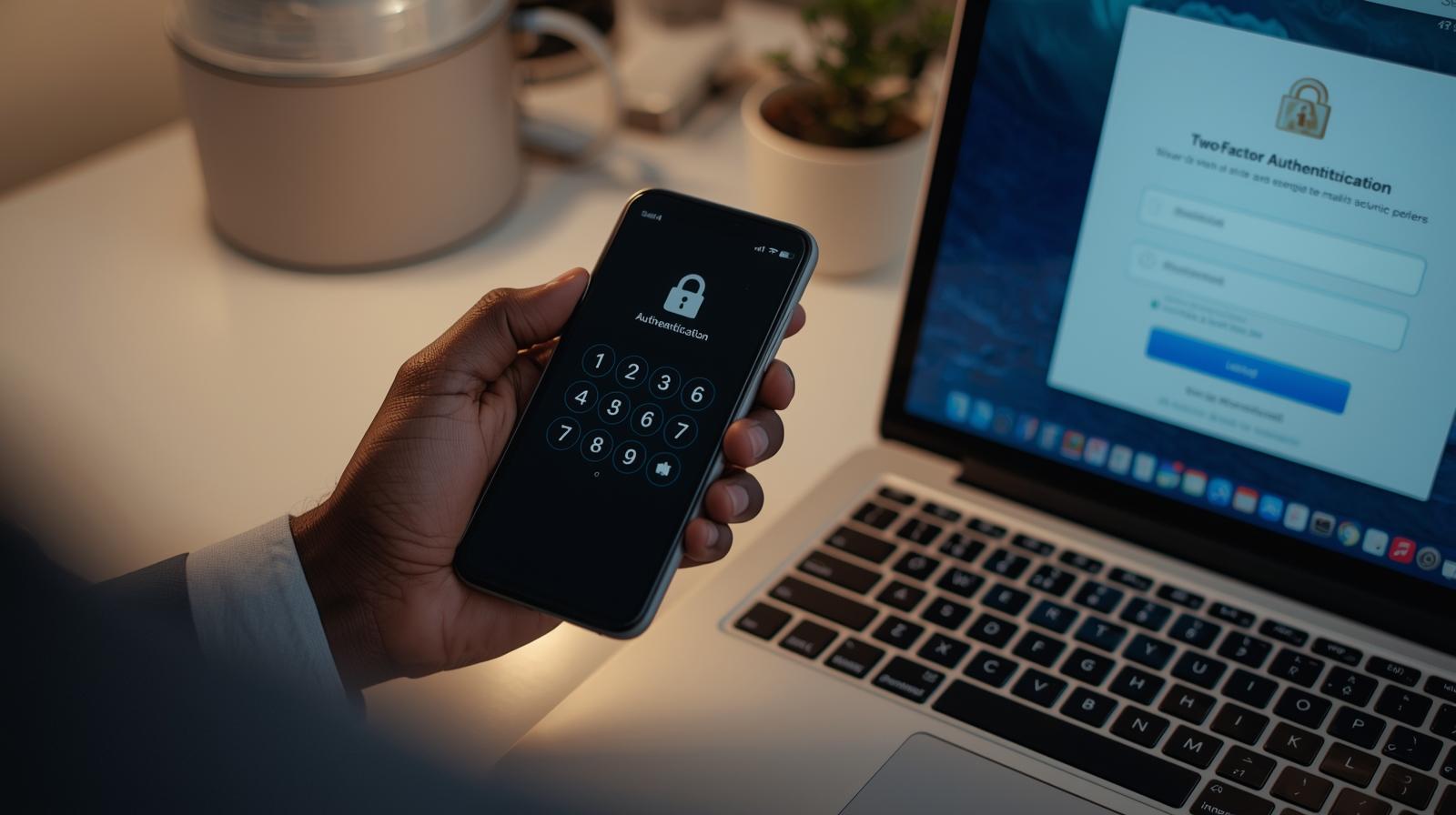
Multi-Factor Authentication adds a second verification step to the login process for digital accounts. Where a standard login requires only a password one factor MFA requires the password plus a second factor that the attacker is unlikely to possess. The most common second factors are a time-limited code generated by an authenticator app on your smartphone, a code sent via SMS to a registered phone number, or a physical security key. The critical security improvement that MFA provides is the elimination of password-only authentication as the sole barrier to account access: even if an attacker correctly obtains your password through phishing, data breach, or brute force they cannot access your account without also possessing the second factor.
For Nigerian businesses implementing MFA, the prioritisation of which accounts to secure should follow the potential impact of a breach. Website administrative accounts the accounts that control the content, configuration, and code of your business website should be the first priority. A compromised website admin account can result in complete site defacement, data theft, or malware injection. Hosting control panel accounts which control the underlying server infrastructure are equally critical and often more damaging if compromised. Business email accounts which are frequently used to reset passwords for all other accounts and which contain sensitive business communications are also a high priority. And any accounts with payment or banking authority should be secured with the strongest available MFA.
The two most widely used MFA methods authenticator apps and SMS codes are not equally secure. SMS-based MFA, while significantly more secure than password-only authentication, is vulnerable to SIM swapping attacks a technique increasingly used in Nigeria where attackers persuade a mobile network operator to transfer a victim’s phone number to an attacker-controlled SIM, allowing them to receive the SMS codes. Authenticator app MFA using apps like Google Authenticator, Microsoft Authenticator, or Authy is not vulnerable to SIM swapping because the code is generated locally on the registered device without involvement of the mobile network. For accounts where the potential impact of a breach is high, authenticator app MFA is the recommended standard.
E15 Technologies Limited’s Infrastructure and Support service includes security configuration review and hardening as part of our infrastructure management offering. Our security reviews cover MFA implementation, access control configuration, credential management, and the broader set of administrative security practices that protect the accounts controlling client infrastructure. For businesses that have not yet implemented MFA on their critical accounts, our security team can guide the implementation process and verify correct configuration. Contact our team today to discuss a security review and hardening engagement.
Multi-Factor Authentication is the highest-return five minutes in digital security. E15 Technologies Limited can ensure it is correctly implemented across your critical business accounts. Contact our Infrastructure and Support team today.
There is a security improvement available to every Nigerian business that manages digital accounts website…

In the Nigerian startup and growth-stage investment ecosystem, the pitch deck has become one of…

Every Nigerian business leader who is not technical faces a version of the same challenge:…

User-centred design is a phrase that has been adopted so widely by the Nigerian design…
Website loading speed is one of the most directly measurable dimensions of digital infrastructure quality…

In every sector of the Nigerian market financial services, technology, retail, professional services, food and…

At E15 Technologies, we don’t just navigate the complex world of technology, we redefine it. Our commitment to excellence is not a mere promise but a relentless pursuit fueled by a team of highly skilled professionals armed with the latest tools and technologies to ensure the highest standards of quality and efficiency.
Monday - Friday 08 AM - 5 PM
